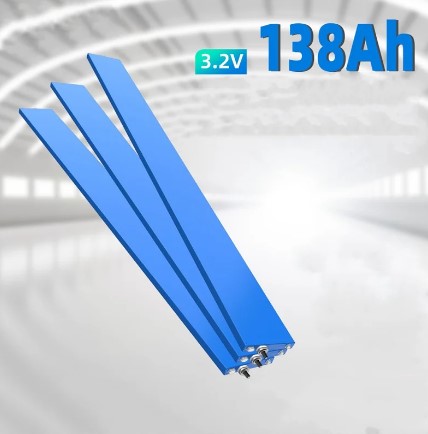
Comme toute autre batterie, une batterie rechargeable au lithium-ion est composée d'une ou plusieurs compartiments générateurs d'énergie appeléscellulesChaque cellule comprend essentiellement trois composants : un électrode positive (connected to the battery’s positive or + terminal), a électrode négative( connecté à la borne négative ou − ), et une substance chimique appelée un électrolyteentre eux. L'électrode positive est généralement composée d'un composé chimique appelé oxyde de cobalt de lithium (LiCoO₂).2—often pronounced “lyco O2”) or, in newer batteries, from lithium iron phosphate (LiFePO4). The électrode négative is generally made from carbon (graphite) and the électrolyte varies from one type of battery to another—but isn’t too important in understanding the basic idea of how the battery works.
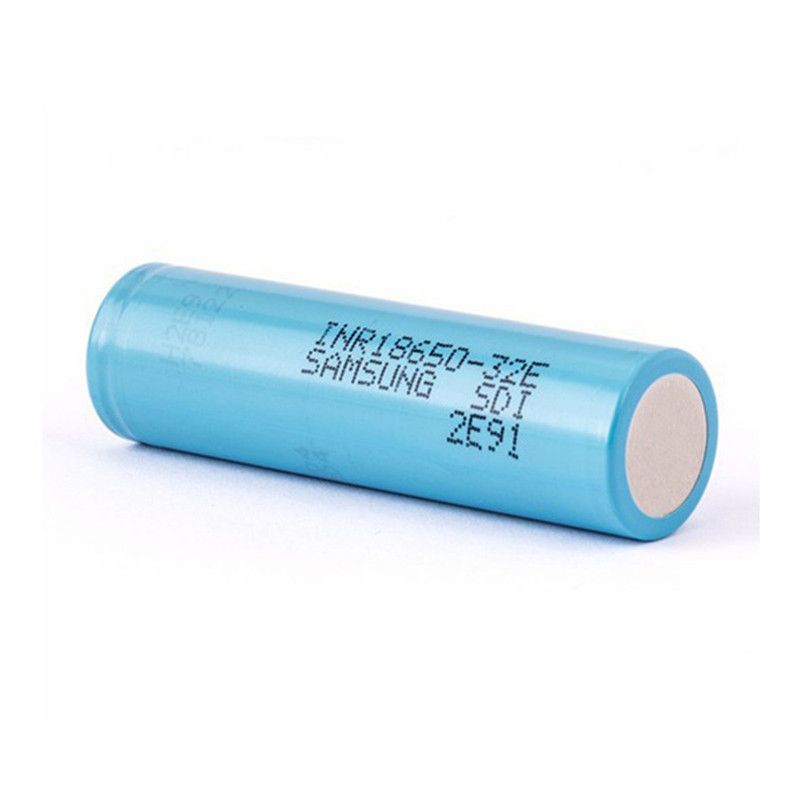
Batterie 18650 32E 3200mAh
All lithium-ion batteries work in broadly the same way. When the battery is charging up, the lithium-cobalt oxide, électrode positive gives up some of its lithium ions, which move through the électrolyte to the negative, graphite electrode and remain there. The battery takes in and stores energy during this process. When the battery is discharging, the lithium ions move back across the électrolyte to the électrode positive, producing the energy that powers the battery. In both cases, electrons flow in the opposite direction to the ions around the outer circuit. Electrons do not flow through the électrolyte: it’s effectively an insulating barrier, so far as electrons are concerned.
The movement of ions (through the électrolyte) and electrons (around the external circuit, in the opposite direction) are interconnected processes, and if either stops so does the other. If ions stop moving through the électrolyte because the battery completely discharges, electrons can’t move through the outer circuit either—so you lose your power. Similarly, if you switch off whatever the battery is powering, the flow of electrons stops and so does the flow of ions. The battery essentially stops discharging at a high rate (but it does keep on discharging, at a very slow rate, even with the appliance disconnected).
Contrairement aux batteries plus simples, celles au lithium-ion ont intégréesélectroniquedes contrôleurs qui régulent leur mode de charge et de décharge. Ils empêchent la surcharge et la surchauffe, qui peuvent provoquer l'explosion des batteries lithium-ion dans certaines circonstances.