We define voltage as the 金額 of potential energy between two points on a circuit. One point has more charge than another. This difference in charge between the two points is called voltage. It is measured in volts, which, technically, is the potential energy difference between two points that will impart one joule of energy per coulomb of charge that passes through it (don’t panic if this makes no sense, all will be explained). The unit “volt” is named after the Italian physicist アレッサンドロ・ボルタ who invented what is considered the first chemical battery. Voltage is represented in equations and schematics by the letter “V”.
電圧、電流、および抵抗を説明する際、一般的な比喩として水槽があります。この比喩では、電荷は水によって表されます。金額電圧は水で表されます圧力そして、電流は水によって表されるフローでは、この比喩のために、覚えていてください:
- 水 = 充電
- 圧力 = 電圧
- フロー = 電流
地上から一定の高さにある水槽を考えます。この水槽の底にはホースがあります。
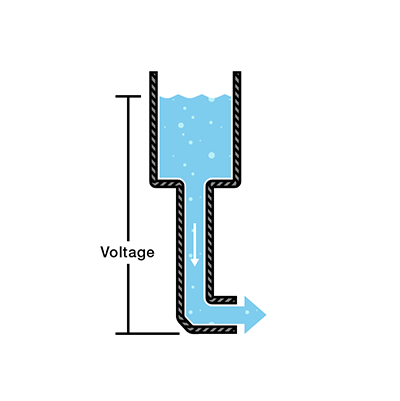
ホースの終端の圧力は電圧を表すことができます。タンク内の水は電荷を表します。タンクの水が多いほど、電荷は高くなり、ホースの端で測定される圧力も高くなります。
このタンクをバッテリーのように考えることができます。つまり、一定量のエネルギーを蓄え、それを放出する場所です。タンクの中身を一定量消費すると、ホースの先に生じる圧力が下がります。これは電圧が低下することと考えることができ、たとえば懐中電灯の電池が切れかけると明るさが暗くなるのに似ています。また、ホースを通じて流れる水の量も減少します。圧力が低くなると流れる水の量も少なくなり、これが電流につながります。