We define voltage as the 양 of potential energy between two points on a circuit. One point has more charge than another. This difference in charge between the two points is called voltage. It is measured in volts, which, technically, is the potential energy difference between two points that will impart one joule of energy per coulomb of charge that passes through it (don’t panic if this makes no sense, all will be explained). The unit “volt” is named after the Italian physicist 알레산드로 볼타 who invented what is considered the first chemical battery. Voltage is represented in equations and schematics by the letter “V”.
전압, 전류, 저항을 설명할 때 흔히 사용하는 비유는 물탱크입니다. 이 비유에서 전하는 물로 표현됩니다.양전압은 물로 표시됩니다.압력, 그리고 전류는 물로 표시됩니다.흐름그래서 이 비유를 위해, 기억하세요:
- 물 = 청구
- 압력 = 전압
- 흐름 = 전류
지상에서 일정 높이에 위치한 물탱크를 생각해보세요. 이 탱크의 바닥에는 호스가 있습니다.
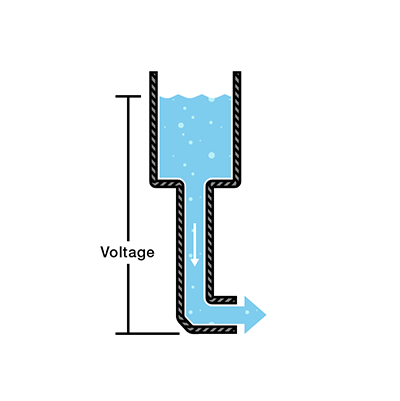
호스 끝의 압력은 전압을 나타낼 수 있습니다. 탱크 안의 물은 전하를 나타냅니다. 탱크에 물이 많을수록 전하가 높아지고, 호스 끝에서 측정되는 압력도 더 높아집니다.
이 탱크를 배터리로 생각할 수 있는데, 일정량의 에너지를 저장했다가 방출하는 곳입니다. 탱크를 일정량 방전시키면, 호스 끝에서 생성되는 압력이 내려갑니다. 이것을 전압이 낮아지는 것과 비슷하게 생각할 수 있는데, 예를 들어 손전등이 배터리가 다 닳아서 희미해지는 것과 같습니다. 또한 호를 통해 흐르는 물의 양도 감소합니다. 압력이 낮아지면 흐르는 물의 양이 적어지게 되고, 이것이 바로 전류로 이어집니다.