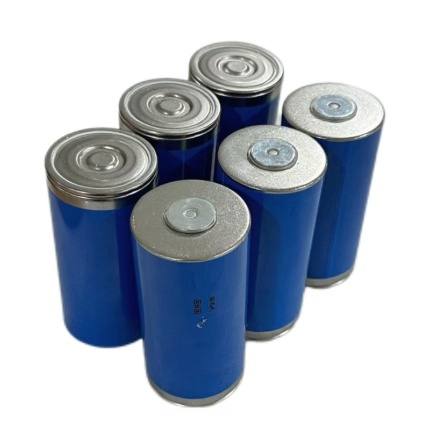
A short technical explainer for anyone following the energy storage industry.
Over the past years, Lithium Iron Phosphate (LFP) batteries have moved from 120–140 Wh/kg to 170–200 Wh/kg, with the next generation pushing even higher.
LFP used to be seen as “safe but low-energy.” Not anymore.
Here are the key innovations driving the jump in energy density:
1️⃣ Better Cathode Engineering (LFP Material Itself)
• Smaller particle size → allows lithium ions to move faster
• Advanced carbon coating (multi-layer, nano-carbon, CNT additives) → boosts conductivity
• Optimized Fe/P ratio & crystal structure → more stable and higher usable capacity
• Doping with Mg/Ti/Zr → reduces internal resistance and increases output
📈 Total improvement: ~5–15%
2️⃣ Silicon-Carbon Anodes (Si/C)
Graphite can only store 372 mAh/g.
Silicon? Up to 4200 mAh/g.
Today’s LFP+Si/C combinations add 3–10% silicon, giving a major increase in cell capacity without sacrificing stability.
📈 Improvement: ~10–20% (biggest single contributor)
3️⃣ High-Density Electrodes (High Compaction)
Manufacturers now use:
Higher pressure rolling
Optimized slurry formulation
More active material per volume
Electrode densities improved dramatically:
Cathode: 1.1 → 1.6 g/cm³
Anode: 1.5 → 1.8 g/cm³
📈 Improvement: ~10–15%
4️⃣ Cell Design Innovations
New structural designs maximize the space used inside a cell:
Tabless designs (like in 4680 cells)
Wider & longer jelly rolls
Improved winding and stacking
📈 Improvement: ~3–5%
5️⃣ System-Level Integration (CTP & CTC)
This doesn’t change the chemistry — it changes the battery pack.
CTP (Cell-to-Pack) removes modules → more energy in the same space
CTC (Cell-to-Chassis) integrates the pack into the vehicle frame
Space utilization improved from 45% → 65% → 72%+.
📈 Pack-level improvement: 10–20%
6️⃣ The Next Wave: LMFP (Lithium Manganese Iron Phosphate)
By adding manganese to the LFP structure, LMFP offers:
Higher voltage
Higher capacity
Similar safety to LFP
This chemistry targets 230–250 Wh/kg, filling the gap between LFP and NCM.
📈 Future uplift: +30–50% potential
🚀 What This Means for the Market
LFP is no longer “just for low-cost applications.”
It is becoming a mainstream choice for:
Home energy storage systems (ESS)
Commercial ESS
EVs
Telecom & off-grid
Industrial backup power
Why?
✔ Safer
✔ Longer cycle life
✔ Lower cost
✔ Now: much higher energy density
🔍 Final Thoughts
The improvement of LFP energy density is not due to one breakthrough — it is the result of multiple innovations across materials, electrodes, cell design, and pack engineering.
As the industry moves toward LMFP and higher-silicon anodes, we can expect LFP-based chemistries to capture even more of the ESS and EV market.